


Importing PVC Windows from Turkey: Documents, Delivery Terms and Comparing Quotes
If you are an importer, dealer or contractor thinking of buying PVC windows and doors from Turkey, settle three things at the start: the documents your target market requires (for the European Union: CE marking, EN 14351-1 and a Declaration of Performance), the delivery term (the Incoterms® rule) and a like-for-like comparison of quotes. This guide brings together the questions to ask a supplier and the technical values to check when you read a quote.

Before you import: documents, delivery terms and comparable quotes
In the European Union, windows and external pedestrian doorsets fall under the harmonised product standard EN 14351-1. To be sold on the EU market they need a Declaration of Performance (DoP) and CE marking under the Construction Products Regulation (EU) No 305/2011. The DoP describes the declared performance of the product and is the basis for the CE marking; by issuing it, the manufacturer takes responsibility for the product’s conformity with that performance. A copy of the DoP goes to every customer, on paper or electronically, in the official language of the member state where the product is made available. CE marking covers the product, not its installation. Nor do CE marking and a DoP mean that a product suits every use: some characteristics may be declared as “NPD” (no performance determined), so your architect or engineer should confirm suitability for your project. The main part of the EU’s new Construction Products Regulation (EU) 2024/3110 has applied since 8 January 2026; for products still covered by a harmonised standard from the old regime, the provisions of the 2011 regulation in principle continue to apply. Confirm with your supplier and the competent authority in your country which rules apply to your product.
The essential characteristics in a window DoP are: resistance to wind load (EN 12211, classes 1–5 and E), watertightness (EN 12208), air permeability (EN 12207, classes 1–4), thermal transmittance Uw (EN ISO 10077 or EN ISO 12567), acoustic performance (Rw, dB), radiation properties (solar factor g and light transmittance, EN 410), dangerous substances and the load-bearing capacity of safety devices. Windows are usually assessed under system 3: type testing is carried out by a notified laboratory, while factory production control (FPC) is the manufacturer’s responsibility. Type-test reports commissioned by the profile system house can be used by the window manufacturer under a written agreement. An importer bringing the product in from outside the EU must check that the manufacturer has carried out type testing and FPC, drawn up the technical documentation and the DoP, and that the product carries CE marking, instructions and safety information in the required national language; the importer adds its own name and address to the product, packaging or accompanying documents and keeps a copy of the DoP for 10 years.
Fix the delivery term in writing using the International Chamber of Commerce (ICC) Incoterms® 2020 rules. Of the 11 rules, 7 can be used for any mode of transport and 4 (FAS, FOB, CFR, CIF) only for sea and inland waterway transport. Under EXW (Ex Works) the seller places the goods at the buyer’s disposal at a named place such as a factory or warehouse; loading onto the collecting vehicle and export clearance are not the seller’s obligation. Under FOB (Free on Board) the seller delivers the goods on board the vessel nominated by the buyer at the named port of shipment; risk passes to the buyer once the goods are on board, and the buyer bears all costs from then on. Under CIF (Cost, Insurance and Freight) risk also passes once the goods are on board, but the seller contracts for carriage and insurance; the default cover under CIF is Institute Cargo Clauses (C), so write wider cover into the contract if you need it. Incoterms do not say when ownership passes, nor how or when payment is made; those belong in the sales contract.
As glazed products, windows are generally transported upright; they are stacked on their sills, spaced so that hardware does not rub, on blocking that protects the surface and the gaskets. Until installation they should be kept free of moisture and dirt: water that gets into the glazing pocket and stays there can make the edge seal of the insulating glass fail, and products kept under covers need ventilation so that they do not overheat. Construction dirt left inside the frame affects how the window operates, and windows should never be lifted by the handle or hardware. A shipment typically involves a pro forma invoice, a commercial invoice, a detailed packing list, a certificate of origin and, by sea, a bill of lading. Ask the supplier separately about packaging, load plan, lead time and payment terms at quotation stage, and have the answers written into the quote.
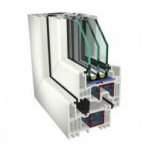
When comparing quotes, look for the same information on every line: profile brand and series (for example Deceuninck Egepen Legend 80mm or GEALAN S9000 IQ 83mm), the declared Uw for the whole window and how it was calculated, the glass build-up (4+16+4 double glazing, 4+12+4+12+4 triple glazing, argon fill) and its Ug, the hardware and handle brand (for example Hoppe Atlanta), opening type, colour, air, water and wind classes, whether packaging and installation are included, and the Incoterms rule and delivery place. Ug is the centre-of-glass value only (EN 673); Uw is the value for the whole window, profile and glass together. On Legend 80mm, for instance, the profile has Uf 0.92 W/m²K, while with triple glazing up to 52 mm the window can reach Uw 0.78 W/m²K. Ağaoğlu makes made-to-measure PVC windows and doors with Deceuninck Egepen and GEALAN profiles on fully CNC-controlled lines in its 51,500 m² factory in the Niğde Organised Industrial Zone; when you ask for a quote, you can ask which documents can be prepared for your target market.
Technical data
| Product standard (EU) | EN 14351-1 · windows and external pedestrian doorsets |
|---|---|
| Legal framework (EU) | Regulation (EU) No 305/2011 · main part of new Regulation (EU) 2024/3110 applies since 8 January 2026 |
| Declaration of Performance (DoP) | One copy per customer; kept by manufacturer and importer for 10 years |
| Assessment system | System 3: type testing by a notified laboratory, factory production control by the manufacturer |
| Resistance to wind load | EN 12211 / EN 12210 · classes 1–5 and E |
| Watertightness | EN 12208 · classes 1A–9A and E |
| Air permeability | EN 12207 · classes 1–4 |
| Thermal transmittance | Uw, W/m²K · EN ISO 10077 or EN ISO 12567 |
| Radiation properties | Solar factor g and light transmittance · EN 410 |
| Sound insulation | Rw (C;Ctr), dB · EN ISO 717-1 |
| Incoterms® 2020 | 11 rules; FAS, FOB, CFR, CIF for sea and inland waterway only |
| Commercial documents | Pro forma invoice, commercial invoice, packing list, certificate of origin, bill of lading |
Frequently asked questions
What do CE marking and a Declaration of Performance (DoP) mean?
In the EU, windows fall under EN 14351-1 and need a DoP and CE marking to be sold. The DoP states the declared performance for essential characteristics such as wind load, watertightness, air permeability and Uw; the CE marking is based on it. CE marking does not cover installation and does not mean the product suits every project.
What is the difference between EXW, FOB and CIF?
Under EXW the buyer collects the goods at the place named by the seller; loading and export formalities are not the seller’s obligation. Under FOB the seller delivers the goods on board the buyer’s vessel at the port of loading, and risk passes on board. Under CIF risk also passes on board, but the seller contracts for freight and insurance. FOB and CIF are for sea and inland waterway transport only.
Which documents should I ask a supplier for?
For the EU market: the DoP, CE marking details, type-test reports with details of the notified laboratory, factory production control details, instructions and safety information. For the shipment: pro forma invoice, commercial invoice, packing list, certificate of origin and, by sea, a bill of lading. Confirm any additional requirements in your country with the competent authority.
How should I compare PVC window quotes?
Put the profile brand and series, the declared Uw for the whole window, the glass build-up and Ug, the hardware brand, opening type, colour, air, water and wind classes, whether packaging and installation are included, and the Incoterms rule side by side in one table. Ug is the glass value only and should not be confused with Uw.
How can I get an export quote from Ağaoğlu?
Send your window sizes, quantities, profile and glass preferences, destination country and preferred Incoterms rule to our WhatsApp line (+90 444 2 333). In your request, ask about lead time, packaging, payment terms and which documents can be prepared for your target market. You can see how prices are built up on our price calculator page (https://aga.com.tr/pvc-pencere-fiyatlari-ve-fiyat-hesaplama/).
Pages to help you prepare your quote


Get a PVC window quote for your export project.
Send us your sizes, quantities, destination country and delivery term, and we will prepare a tailored quote: +90 444 2 333